
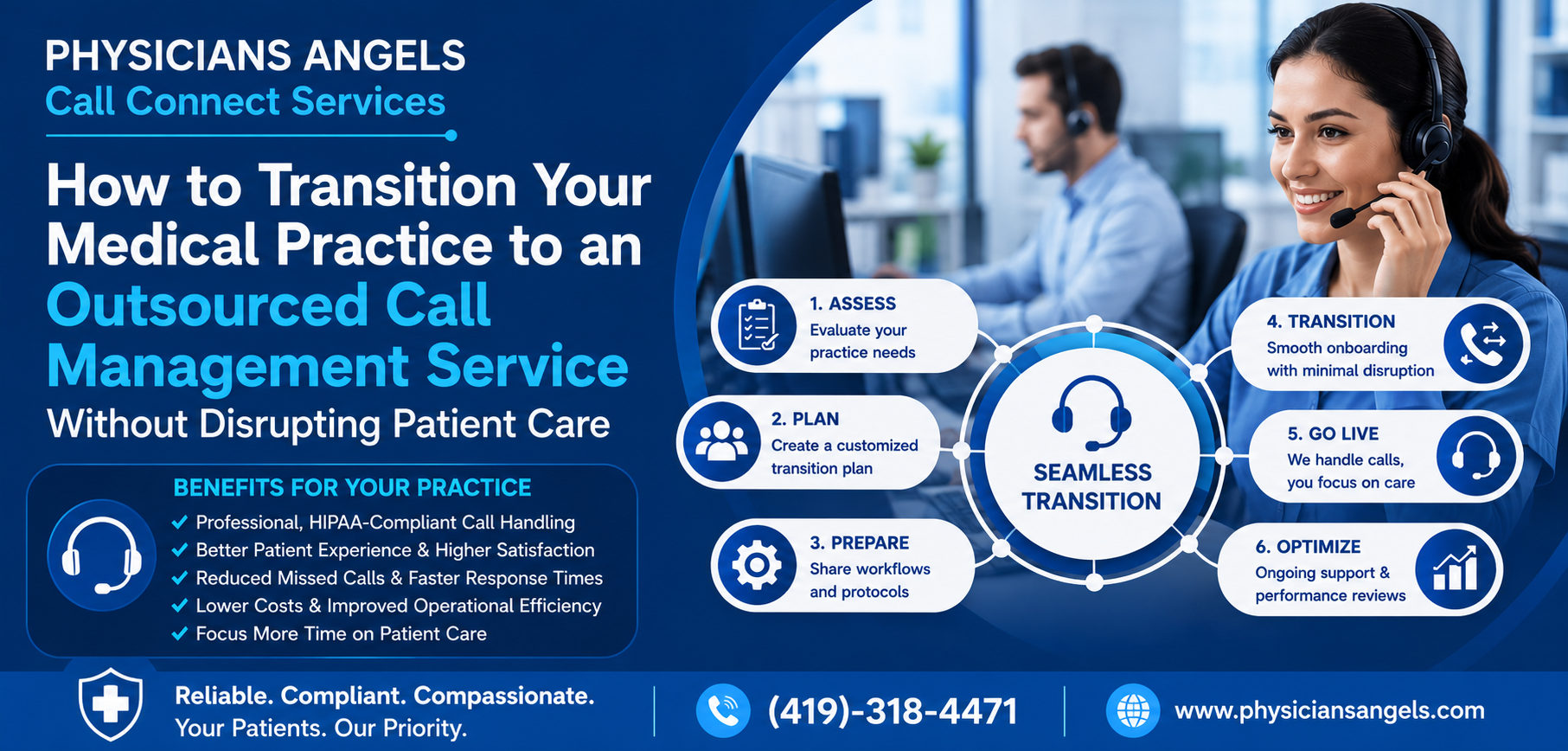
How to Transition Your Medical Practice to an Outsourced Call Management Service Without Disrupting Patient Care
Introduction
Every patient call represents an opportunity to provide timely care, strengthen patient relationships, and grow your practice. Yet many healthcare organizations struggle to answer every call consistently due to increasing patient volumes, staffing shortages, rising operational costs, and administrative overload.
Missed calls can lead to delayed appointments, frustrated patients, lost revenue, and added pressure on front-desk teams. Hiring additional staff may seem like the obvious solution, but recruiting, training, and retaining qualified employees has become increasingly challenging.
That's why more healthcare providers are turning to outsourced medical call management services to improve patient access while allowing in-house teams to focus on delivering exceptional care.
A common concern remains:
"Will transitioning to an outsourced call management service disrupt our patients or daily operations?"
The answer is no, provided the transition is planned thoughtfully and supported by an experienced healthcare call management partner.
This guide explains how to make the transition smoothly while maintaining continuity of care, protecting patient satisfaction, and improving operational efficiency.
Call Management
Patient communication has become more complex than simply answering the phone.
Today's practices manage calls related to:
-
Appointment scheduling
-
Appointment changes
-
Appointment cancellations
-
Insurance verification inquiries
-
Prescription refill requests
-
Referral coordination
-
Billing questions
-
Prior authorization updates
-
Test result inquiries
-
Provider messages
-
Urgent patient concerns
-
After-hours support
As call volumes increase, many front desks struggle to keep up while simultaneously assisting patients in the office.
An outsourced medical call management service helps practices extend administrative capacity without increasing payroll or overwhelming existing staff.
Benefits of a Well-Planned Transition
A structured implementation can help practices achieve:
-
Faster call response times
-
Improved patient access
-
Reduced missed calls
-
Better appointment scheduling
-
Lower front-desk workload
-
Consistent patient communication
-
Reliable after-hours coverage
-
Improved documentation
-
Greater operational flexibility
The goal is to enhance, not interrupt the patient experience.
Step 1: Assess Your Current Call Management Process
Begin by understanding how calls are currently handled.
Evaluate:
-
Daily call volume
-
Peak call hours
-
Average hold times
-
Call abandonment rates
-
Missed calls
-
After-hours coverage
-
Front-desk workload
-
Common patient requests
This assessment identifies areas where outsourced support can provide the greatest value.
Step 2: Define Your Objectives
Clarify what success looks like for your practice.
Examples include:
-
Reduce missed calls
-
Improve patient access
-
Increase appointment bookings
-
Support after-hours availability
-
Reduce front-desk burnout
-
Improve documentation
-
Enhance patient satisfaction
-
Increase operational efficiency
Clearly defined objectives help guide implementation and measure results.
Step 3: Identify Which Calls to Outsource
Not every call needs to be transferred immediately.
Many practices begin with:
-
New patient inquiries
-
Appointment scheduling
-
Appointment confirmations
-
Appointment rescheduling
-
General patient questions
-
Prescription refill requests
-
Billing inquiries
-
After-hours calls
As workflows mature, additional call types can be incorporated.
Step 4: Choose a Healthcare-Focused Call Management Partner
A successful transition depends on selecting a provider that understands healthcare workflows.
Look for a partner with:
-
Experience supporting medical practices
-
Knowledge of healthcare terminology
-
HIPAA-conscious communication workflows
-
Secure call documentation processes
-
Flexible call routing options
-
Escalation procedures for urgent calls
-
Integration capabilities with your existing systems
-
Ongoing quality assurance
A healthcare-specific partner can align more effectively with your practice's operational needs.
Step 5: Document Call Handling Workflows
Before implementation, establish clear procedures for handling different types of calls.
Create protocols for:
-
Appointment scheduling
-
Appointment cancellations
-
Prescription refill requests
-
Insurance-related questions
-
Billing inquiries
-
Referral requests
-
Urgent patient concerns
-
Provider message routing
-
Emergency escalation
Documented workflows promote consistency and reduce confusion.
Step 6: Configure Call Routing
Determine how calls should flow.
Examples include:
-
Business hours routing
-
After-hours routing
-
Overflow call handling
-
Holiday coverage
-
Specialty-specific routing
-
Provider-specific routing
-
Emergency escalation
A well-designed routing strategy ensures patients reach the appropriate resource promptly.
Step 7: Train the Call Management Team
Comprehensive onboarding should include:
-
Practice overview
-
Provider information
-
Services offered
-
Scheduling preferences
-
Insurance participation
-
Call scripts
-
Escalation procedures
-
Frequently asked questions
-
Communication expectations
Training helps create a consistent experience for patients.
Step 8: Communicate With Your Front-Desk Staff
Outsourced call management should support, not replace your in-house team whenever possible.
Explain:
-
Why the transition is occurring
-
Which calls will be outsourced
-
How responsibilities will change
-
Collaboration expectations
-
Escalation processes
Transparency encourages teamwork and smoother adoption.
Step 9: Begin With a Phased Rollout
Rather than outsourcing all calls at once, start with selected call categories or limited hours.
Examples:
-
After-hours only
-
Weekend coverage
-
Overflow calls
-
Appointment scheduling
-
New patient inquiries
This approach allows workflows to be refined before expanding services.
Step 10: Monitor Key Performance Indicators
Track measurable outcomes such as:
-
Call answer rate
-
Average speed to answer
-
Call abandonment rate
-
Average handle time
-
Appointment conversion rate
-
First-call resolution
-
Patient satisfaction
-
Documentation accuracy
-
After-hours response performance
Regular reporting helps identify opportunities for improvement.
Step 11: Gather Feedback and Optimize
Solicit input from:
-
Patients
-
Front-desk staff
-
Providers
-
Office managers
-
Call management team
Use feedback to refine scripts, workflows, escalation processes, and scheduling procedures.
Continuous improvement supports long-term success.
Common Transition Mistakes to Avoid
Healthcare practices should avoid:
-
Outsourcing every call type immediately
-
Failing to document workflows
-
Providing inadequate training
-
Creating unclear escalation procedures
-
Not informing internal staff
-
Ignoring patient feedback
-
Measuring only call volume instead of patient outcomes
A thoughtful implementation minimizes these risks.
How Physicians Angels Call Connect Simplifies the Transition
Physicians Angels Call Connect works collaboratively with healthcare organizations to ensure a seamless transition.
Our implementation process includes:
-
Practice workflow assessment
-
Call flow design
-
Customized scripting
-
Appointment scheduling support
-
After-hours call coverage
-
Overflow call management
-
Secure message documentation
-
Escalation planning
-
Ongoing quality monitoring
-
Performance reporting
Our experienced virtual call agents become an extension of your practice, delivering professional, consistent patient communication while supporting your operational goals.
Benefits After Transitioning
Practices that implement a structured call management strategy often experience:
-
Improved patient accessibility
-
Fewer missed calls
-
Better appointment scheduling
-
Increased provider utilization
-
Lower administrative burden
-
Enhanced patient satisfaction
-
Reduced front-desk stress
-
Greater operational flexibility
-
Improved practice efficiency
-
Better support for future growth
The specific outcomes vary depending on call volume, staffing, workflows, and implementation approach.
Frequently Asked Questions
How long does it take to transition to an outsourced call management service?
The timeline depends on your practice's size, call volume, and workflow complexity. Many organizations begin with a phased rollout to minimize disruption and allow for adjustments.
Will patients know their calls are being handled by an outsourced team?
When agents are trained on your practice's workflows, communication standards, and scheduling protocols, they function as a seamless extension of your team, providing patients with a consistent experience.
Can we outsource only after-hours or overflow calls?
Yes. Many practices start with after-hours, weekend, or overflow call support before expanding to additional call types based on operational needs.
How are urgent or emergency calls handled?
Clear escalation protocols are established during implementation so that urgent calls are directed to the appropriate clinical personnel or emergency services according to your practice's procedures.
Is outsourced medical call management suitable for specialty practices?
Yes. Specialty clinics, including cardiology, gastroenterology, OB-GYN, orthopedics, dermatology, behavioral health, and others can tailor call workflows to meet their specific scheduling and communication requirements.
Ready to Modernize Your Patient Call Management?
Transitioning to an outsourced medical call management service doesn't have to be complicated. With the right planning and an experienced healthcare partner, your practice can improve patient access, reduce administrative pressure, and maintain a high standard of service throughout the implementation process.
Physicians Angels Call Connect provides customized medical call management solutions designed to integrate with your existing workflows, support your front-desk team, and enhance the patient experience.
Schedule a Free Consultation
If you're ready to improve call handling without disrupting patient care, schedule a free consultation with Physicians Angels Call Connect. We'll evaluate your current call workflows, discuss your operational goals, and design a tailored transition plan that helps your practice stay connected, responsive, and prepared for future growth.
📧 Email: contact@physiciansangels.com
📞 Call: (419)-318-4471
🌐 Visit: www.physiciansangels.com