
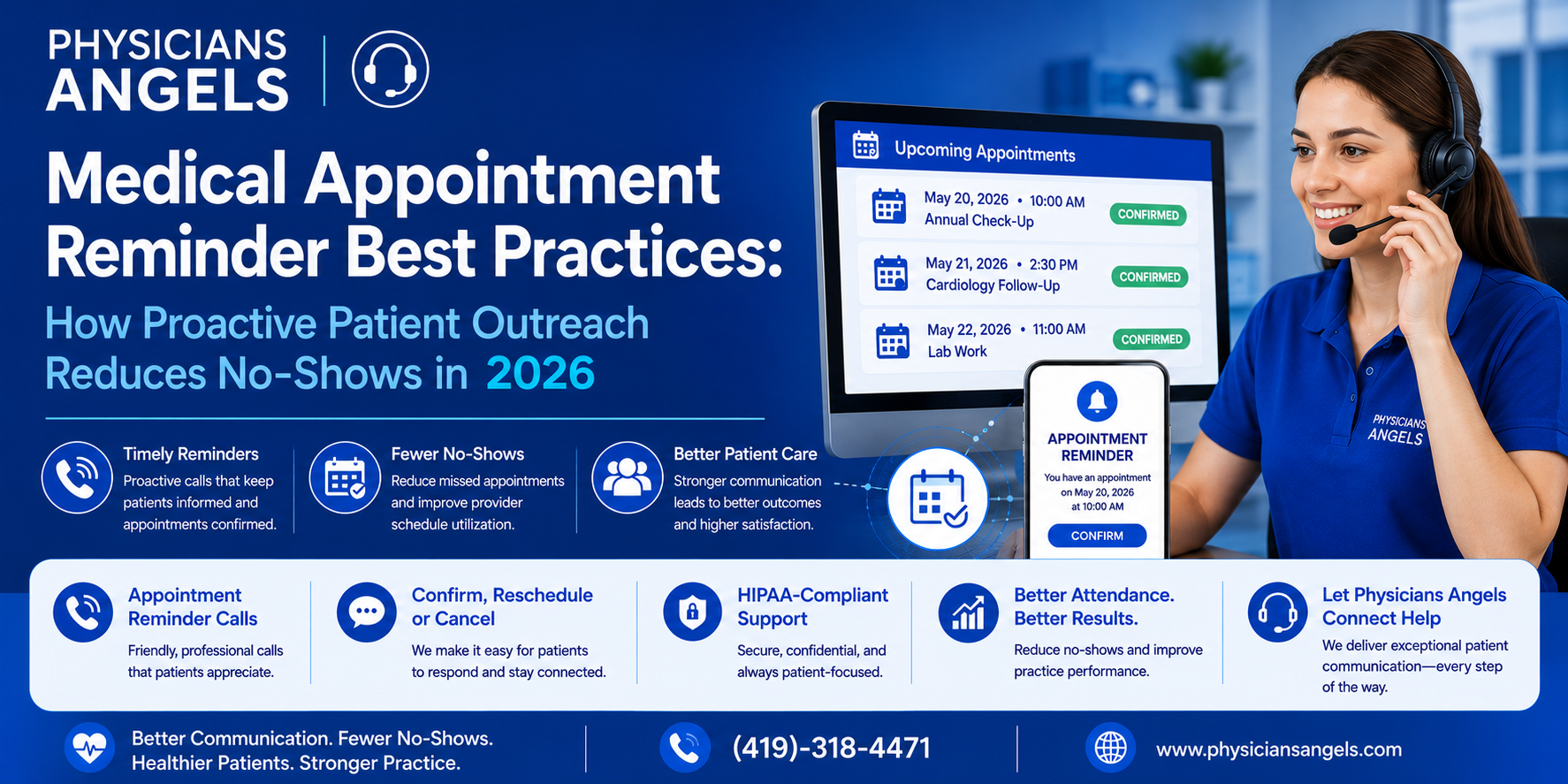
Medical Appointment Reminder Best Practices: How Proactive Patient Outreach Reduces No-Shows in 2026
Every missed appointment represents more than an empty time slot, it impacts patient health, provider productivity, staff efficiency, and practice revenue. In today's healthcare environment, where patient demand continues to rise and operational costs are increasing, minimizing no-shows has become a top priority for medical practices.
Despite advances in scheduling technology, patient no-shows remain a persistent challenge across nearly every specialty. Patients may forget appointments, misunderstand preparation instructions, experience scheduling conflicts, or simply fail to notify the practice when they cannot attend. These missed opportunities create unnecessary gaps in provider schedules, delay patient care, and reduce overall practice efficiency.
One of the most effective ways to address this challenge is through proactive patient outreach.
Rather than waiting for patients to remember their appointments, proactive communication ensures they receive timely reminders, confirmations, and follow-up support before their scheduled visit. When combined with professional medical call management, appointment reminders become a powerful tool for improving attendance, enhancing patient satisfaction, and optimizing practice operations.
This is where Physicians Angels Call Connect makes a difference.
Our healthcare-trained virtual call agents provide reliable, HIPAA-conscious patient communication that helps practices stay connected with patients before, during, and after their appointments. From reminder calls and appointment confirmations to rescheduling assistance and patient follow-up, Call Connect ensures every patient interaction supports better outcomes and stronger operational performance.
In this guide, we'll explore proven appointment reminder best practices and show how proactive patient outreach helps healthcare organizations reduce no-shows, improve patient engagement, and maximize provider utilization in 2026.
Why Appointment Reminders Matter More Than Ever
Healthcare practices are busier than ever.
Growing patient populations, physician shortages, and increasing demand for healthcare services mean that every available appointment matters. When patients fail to attend scheduled visits without notice, the impact extends well beyond a single missed appointment.
A missed appointment can lead to:
-
Delayed diagnosis or treatment
-
Longer wait times for other patients
-
Lost revenue opportunities
-
Inefficient provider schedules
-
Increased administrative workload
-
Lower patient satisfaction
For specialty practices where appointments involve extensive preparation, equipment, or dedicated clinical staff, no-shows can be particularly costly.
Effective appointment reminder programs help practices protect valuable schedule availability while encouraging patients to remain engaged in their care.
The Hidden Cost of Patient No-Shows
Many healthcare providers underestimate the true cost of missed appointments.
Beyond immediate revenue loss, no-shows create operational challenges that affect nearly every aspect of the practice.
Lost Revenue
Every empty appointment represents revenue that may never be recovered.
Whether it's a routine office visit, specialist consultation, diagnostic procedure, or follow-up appointment, unused provider time directly affects practice profitability.
Reduced Provider Productivity
Physicians, nurses, and clinical staff prepare for scheduled appointments in advance.
When patients fail to arrive, providers experience idle time that could have been allocated to other patients awaiting care.
This reduces overall productivity and limits patient access.
Increased Administrative Work
Missed appointments create additional responsibilities for office staff, including:
-
Contacting patients
-
Rescheduling visits
-
Updating schedules
-
Managing cancellation lists
-
Documenting missed appointments
-
Following up on patient care needs
These extra tasks consume valuable administrative resources that could be focused on serving other patients.
Delayed Patient Care
Patients who miss appointments often postpone necessary treatment, preventive screenings, or follow-up care.
This can result in worsening medical conditions, delayed diagnoses, and avoidable complications that affect both patient outcomes and long-term healthcare costs.
Lower Patient Satisfaction
Long appointment wait times are a common complaint among patients.
Ironically, frequent no-shows contribute to scheduling inefficiencies that make it harder for practices to provide timely access for patients who are actively seeking care.
Reducing no-shows helps create a more efficient scheduling system that benefits everyone.
Common Reasons Patients Miss Appointments
Understanding why patients miss appointments is the first step toward reducing no-show rates.
While every patient situation is different, several common factors contribute to missed visits.
Simply Forgetting
Busy schedules, family responsibilities, work commitments, and everyday distractions make it easy for patients to forget appointments that were scheduled weeks or months in advance.
Consistent reminders significantly reduce forgetfulness.
Scheduling Conflicts
Unexpected meetings, childcare responsibilities, transportation issues, or personal emergencies may prevent patients from attending appointments.
Providing easy options for rescheduling helps practices recover these appointments before they become no-shows.
Lack of Appointment Details
Patients sometimes forget important information such as:
-
Appointment date
-
Appointment time
-
Provider name
-
Office location
-
Procedure preparation requirements
Reminder calls help reinforce these details and reduce confusion.
Anxiety About Medical Procedures
Some patients postpone appointments because they feel anxious about upcoming procedures or consultations.
Friendly reminder calls provide an opportunity to answer questions, explain preparation requirements, and reassure patients before their visit.
Transportation Challenges
Patients without reliable transportation may struggle to reach appointments, particularly older adults and individuals living in rural communities.
Early reminders allow patients additional time to arrange transportation or request scheduling adjustments.
Communication Gaps
Sometimes patients simply never receive appointment confirmation after scheduling.
Without ongoing communication, patients may assume appointments were cancelled or scheduled incorrectly.
Consistent outreach helps eliminate uncertainty.
What Is Proactive Patient Outreach?
Proactive patient outreach is the process of contacting patients before important healthcare events rather than waiting for patients to initiate communication.
Instead of reacting to missed appointments after they occur, healthcare practices engage patients beforehand through structured communication programs.
These outreach efforts may include:
-
Appointment reminder calls
-
Appointment confirmation calls
-
Courtesy reminder messages
-
Procedure preparation reminders
-
Follow-up scheduling
-
Recall reminders for preventive care
-
Wellness visit reminders
-
Patient satisfaction follow-ups
The objective is simple:
Help patients stay informed, prepared, and engaged throughout their healthcare journey.
Practices that implement proactive outreach often experience higher appointment attendance, stronger patient relationships, and more efficient daily operations.
How Physicians Angels Call Connect Improves Appointment Reminder Workflows
Managing appointment reminders internally can become overwhelming as patient volumes increase.
Front desk teams often balance incoming phone calls, patient check-ins, insurance verification, scheduling, and administrative tasks simultaneously. As a result, reminder calls may be delayed, rushed, or overlooked.
Physicians Angels Call Connect provides dedicated healthcare-trained virtual call agents who ensure appointment reminder workflows remain consistent, timely, and professional.
Personalized Reminder Calls
Our call agents contact patients before their appointments to confirm attendance, verify important details, and answer basic scheduling questions.
Every interaction is handled with professionalism and empathy, creating a positive patient experience.
Appointment Confirmations
Call Connect confirms whether patients plan to attend their scheduled visit.
If scheduling conflicts arise, patients can request changes before the appointment date, allowing practices to fill open time slots more efficiently.
Rescheduling Assistance
Rather than allowing appointments to become no-shows, our virtual call agents help patients reschedule when necessary.
This proactive approach minimizes lost provider time while improving patient access.
Procedure Preparation Reminders
Many specialty appointments require patients to follow specific preparation instructions before arrival.
Our agents reinforce important information such as:
-
Fasting requirements
-
Medication instructions
-
Arrival times
-
Required documentation
-
Transportation recommendations
-
Pre-procedure preparation guidelines
Better-informed patients are more likely to arrive prepared and on time.
Consistent Patient Communication
Every reminder call represents an opportunity to strengthen patient relationships.
Patients appreciate knowing that their healthcare provider values their time and is committed to helping them receive the care they need.
Professional, courteous communication builds trust while encouraging long-term patient loyalty.
Appointment reminders are no longer just administrative tasks, they are an essential part of delivering outstanding patient care. By combining proactive outreach with experienced healthcare call professionals, Physicians Angels Call Connect helps practices reduce no-shows, improve scheduling efficiency, and create a better experience for both patients and providers.
Medical Appointment Reminder Best Practices
Effective appointment reminders involve much more than simply notifying patients about an upcoming visit. Successful healthcare organizations use reminder programs as part of a broader patient communication strategy that improves attendance, strengthens patient relationships, and keeps provider schedules running efficiently.
Below are some of the most effective appointment reminder best practices healthcare practices should implement in 2026.
1. Send Reminders at the Right Time
Timing is one of the most important factors in reducing no-shows.
Sending reminders too early increases the likelihood that patients will forget again before their appointment. Sending them too late may not leave enough time to reschedule if conflicts arise.
A structured reminder schedule often delivers the best results.
For example:
-
Initial reminder several days before the appointment
-
Confirmation reminder one to two days before
-
Final reminder on the day of the appointment when appropriate
This layered communication approach helps patients stay informed while giving practices time to fill cancelled appointment slots.
2. Personalize Every Patient Interaction
Patients respond more positively when communication feels personal rather than automated.
Effective reminders should include information such as:
-
Patient name
-
Provider name
-
Appointment date
-
Appointment time
-
Practice location
-
Type of visit
-
Preparation instructions
-
Contact information for rescheduling
Personalized communication improves patient engagement and demonstrates professionalism.
3. Make Rescheduling Easy
Patients occasionally need to change appointments.
The goal is not simply to remind patients, it is to prevent missed appointments altogether.
Practices should make it easy for patients to:
-
Confirm appointments
-
Request rescheduling
-
Ask scheduling questions
-
Notify the office about cancellations
Physicians Angels Call Connect allows patients to communicate with knowledgeable healthcare call agents who can assist promptly, helping practices recover appointments before they become no-shows.
4. Reinforce Important Appointment Instructions
Many appointments require patients to complete preparation before arriving.
Examples include:
-
Fasting requirements
-
Medication adjustments
-
Completing paperwork
-
Bringing insurance information
-
Arriving early
-
Transportation arrangements
-
Procedure preparation instructions
Reminder calls provide an excellent opportunity to reinforce these requirements, reducing delays and improving appointment readiness.
5. Maintain HIPAA-Conscious Communication
Patient privacy should remain a priority during every interaction.
Healthcare practices should ensure appointment reminder processes protect confidential patient information while complying with applicable privacy requirements.
Professional call management teams follow secure communication procedures, ensuring patients receive helpful reminders without unnecessarily disclosing sensitive medical information.
6. Follow Up on Missed Appointments Quickly
Even with effective reminder programs, occasional no-shows will occur.
Rather than waiting for patients to contact the practice, proactive follow-up helps:
-
Reschedule appointments promptly
-
Reinforce the importance of continued care
-
Address scheduling barriers
-
Reduce future no-show rates
-
Improve patient retention
Timely follow-up demonstrates that the practice values each patient's health and encourages continuity of care.
Why Multi-Channel Patient Communication Matters
Today's patients expect flexibility in how they communicate with healthcare providers.
Some prefer speaking directly with a live representative, while others appreciate digital reminders.
An effective patient communication strategy often combines multiple outreach methods, including:
-
Live appointment reminder calls
-
Voicemail reminders
-
Secure text reminders (where appropriate)
-
Email confirmations
-
Follow-up phone calls
-
Patient recall campaigns
By using multiple communication channels, practices increase the likelihood that patients receive and respond to appointment reminders.
The Benefits of Professional Medical Call Management
Appointment reminders may appear simple, but managing thousands of patient communications each month requires consistency, organization, and healthcare expertise.
Professional medical call management ensures reminder programs remain reliable regardless of patient volume or staffing challenges.
Increased Appointment Attendance
Consistent patient outreach encourages patients to keep scheduled appointments or notify the office when changes are needed.
This improves provider utilization while reducing costly gaps in the daily schedule.
Better Front Desk Productivity
Front desk employees already manage:
-
Incoming phone calls
-
Patient check-ins
-
Scheduling
-
Insurance verification
-
Payment collection
-
Administrative documentation
Delegating appointment reminder calls to dedicated healthcare call professionals allows in-house staff to focus on patients who are physically present in the office.
Reduced Staff Burnout
Administrative overload contributes significantly to employee stress and turnover.
Professional call management reduces repetitive communication tasks, allowing staff members to focus on higher-value responsibilities while improving overall workplace efficiency.
Improved Patient Satisfaction
Patients appreciate clear communication.
Receiving timely reminder calls demonstrates professionalism, reduces uncertainty, and creates a positive experience before patients even arrive for their appointment.
Better communication often leads to stronger patient loyalty and increased referrals.
How Physicians Angels Call Connect Supports Appointment Reminder Programs
Physicians Angels Call Connect provides healthcare-trained virtual call agents who become a seamless extension of your practice.
Rather than relying on busy front desk staff to manage reminder calls between other responsibilities, our dedicated call professionals ensure every patient receives timely, courteous, and consistent communication.
Personalized Appointment Reminder Calls
Our call agents contact patients before scheduled visits to:
-
Confirm appointments
-
Verify scheduling details
-
Answer basic questions
-
Reinforce arrival instructions
-
Reduce missed appointments
Each interaction is handled with professionalism and empathy, helping practices build stronger patient relationships.
Appointment Confirmation and Schedule Optimization
Confirmed appointments improve schedule reliability.
If patients indicate they cannot attend, our team immediately assists with rescheduling whenever possible, allowing practices to refill appointment openings and maximize provider productivity.
Recall Campaigns
Many preventive services require recurring patient visits.
Call Connect supports recall programs for services such as:
-
Annual wellness visits
-
Preventive screenings
-
Follow-up appointments
-
Chronic disease management
-
Routine specialist evaluations
Proactive outreach encourages patients to remain engaged in ongoing care.
Follow-Up Communication
Patient communication does not end after the appointment.
Our virtual call agents assist practices with:
-
Follow-up scheduling
-
Patient satisfaction outreach
-
Care coordination support
-
Reminder calls for future appointments
-
General administrative communication
These services help strengthen long-term patient relationships while improving continuity of care.
Overflow Call Support
Busy mornings, lunch hours, and seasonal demand often overwhelm front desk teams.
During these high-volume periods, Call Connect provides overflow support to ensure patients receive prompt assistance rather than long hold times or unanswered calls.
This keeps appointment reminder programs running consistently, even during peak workloads.
Measuring the Success of Your Appointment Reminder Program
Healthcare practices should regularly evaluate reminder program performance using measurable key performance indicators (KPIs).
Important metrics include:
-
Appointment confirmation rate
-
No-show rate
-
Cancellation rate
-
Rescheduled appointment rate
-
Patient response rate
-
Average call completion rate
-
Patient satisfaction scores
-
Provider schedule utilization
-
Front desk workload reduction
-
Overall patient retention
Monitoring these metrics helps practices identify opportunities for continuous improvement while demonstrating the value of proactive patient outreach.
Real-World Use Cases
Primary Care Practices
Busy family medicine and internal medicine clinics use Call Connect to manage high volumes of routine appointments, annual wellness visits, preventive screenings, and chronic care follow-ups, helping improve attendance while reducing front desk workload.
Specialty Practices
Cardiology, gastroenterology, orthopedics, dermatology, neurology, OB-GYN, and other specialty practices rely on appointment reminders to reinforce preparation instructions and coordinate complex procedures.
Professional outreach helps reduce cancellations while improving patient readiness.
Multi-Provider Medical Groups
Large healthcare organizations often manage thousands of appointments every week.
Call Connect provides scalable patient communication that maintains consistent reminder processes across multiple providers and locations.
Ambulatory Surgery Centers
Surgical facilities depend on patients arriving fully prepared for scheduled procedures.
Reminder calls reinforce fasting requirements, medication instructions, arrival times, transportation arrangements, and pre-procedure documentation, helping reduce last-minute cancellations and improve operational efficiency.
By implementing structured appointment reminder strategies and partnering with Physicians Angels Call Connect, healthcare practices can significantly reduce no-shows, improve patient engagement, optimize provider schedules, and create a more efficient, patient-centered operation.
Why Healthcare Practices Choose Physicians Angels Call Connect
Every patient interaction shapes the overall patient experience. From the moment a patient schedules an appointment until they arrive at the clinic, timely and professional communication plays a critical role in ensuring continuity of care.
Physicians Angels Call Connect is more than a medical answering service, it is a comprehensive patient communication solution designed specifically for healthcare organizations. Our healthcare-trained virtual call agents become an extension of your practice, ensuring every patient receives prompt, courteous, and professional support.
Whether you're a primary care clinic, specialty practice, dental office, urgent care center, or multi-location healthcare organization, Call Connect helps you reduce no-shows, improve scheduling efficiency, and strengthen patient engagement.
With Physicians Angels Call Connect, your practice can:
-
Reduce patient no-show rates
-
Improve appointment confirmation rates
-
Enhance patient communication and satisfaction
-
Free front desk staff from repetitive reminder calls
-
Increase provider schedule utilization
-
Reduce administrative workload
-
Improve patient retention
-
Deliver professional, HIPAA-conscious call support
-
Scale patient outreach without hiring additional staff
-
Ensure consistent communication before and after appointments
By combining experienced healthcare call agents with structured patient outreach workflows, Physicians Angels helps practices maximize every appointment opportunity while delivering an exceptional patient experience.
The Future of Patient Engagement Begins Before the Appointment
Patient engagement no longer starts when a patient walks through the front door.
It begins with every phone call, appointment confirmation, reminder, and follow-up interaction.
Today's patients expect proactive communication from their healthcare providers. They appreciate timely reminders, easy rescheduling options, and responsive support that helps them stay connected to their care.
Healthcare organizations that invest in proactive patient outreach benefit from:
-
Higher appointment attendance
-
Improved continuity of care
-
Better provider productivity
-
Stronger patient relationships
-
Increased operational efficiency
-
Higher patient satisfaction scores
As healthcare continues to evolve, appointment reminder programs will become an increasingly important part of delivering high-quality, patient-centered care.
Conclusion
Reducing patient no-shows requires more than simply sending reminders—it requires a thoughtful communication strategy that keeps patients informed, engaged, and supported throughout their healthcare journey.
By implementing proven appointment reminder best practices, healthcare practices can improve scheduling efficiency, strengthen provider utilization, reduce administrative burden, and deliver a better patient experience.
Physicians Angels Call Connect makes this possible by providing experienced healthcare-trained virtual call agents who manage appointment reminders, confirmations, patient outreach, and follow-up communication with professionalism and consistency.
Instead of allowing missed appointments to impact productivity and revenue, practices can proactively connect with patients, optimize provider schedules, and create stronger long-term relationships.
Whether you're a small independent practice or a large multi-specialty healthcare organization, Physicians Angels Call Connect helps ensure every patient receives the communication they need—at the right time.
Ready to Reduce No-Shows and Improve Patient Communication?
Every missed appointment is a missed opportunity to deliver care, strengthen patient relationships, and grow your practice.
Physicians Angels Call Connect helps healthcare organizations stay connected with patients through professional appointment reminders, proactive outreach, scheduling support, and compassionate call management.
Our experienced healthcare virtual call agents become an extension of your practice, helping you improve attendance, reduce administrative workload, and maximize provider productivity.
Contact Physicians Angels today to discover how Call Connect can help your practice reduce no-shows and deliver a better patient experience in 2026.
📧 Email: contact@physiciansangels.com
📞 Call: (419)-318-4471
🌐 Visit: www.physiciansangels.com
Frequently Asked Questions (FAQs)
1. What is a medical appointment reminder service?
A medical appointment reminder service proactively contacts patients before scheduled visits to confirm appointments, provide important instructions, answer scheduling questions, and reduce missed appointments.
2. Why are appointment reminders important for healthcare practices?
Appointment reminders help reduce no-shows, improve provider schedule utilization, increase patient attendance, strengthen communication, and improve overall operational efficiency.
3. How does proactive patient outreach reduce no-shows?
Proactive outreach reminds patients about upcoming appointments, reinforces important preparation instructions, allows patients to confirm or reschedule visits, and helps practices fill cancelled appointment slots before they become lost opportunities.
4. Can Physicians Angels Call Connect manage appointment reminder calls?
Yes. Physicians Angels Call Connect provides healthcare-trained virtual call agents who handle appointment reminders, confirmations, rescheduling assistance, patient follow-up, recall campaigns, and other patient communication services.
5. Which healthcare practices benefit from appointment reminder services?
Appointment reminder services are valuable for:
-
Primary Care Practices
-
Family Medicine Clinics
-
Internal Medicine Practices
-
Cardiology Practices
-
Gastroenterology Clinics
-
Orthopedic Practices
-
Dermatology Clinics
-
OB-GYN Practices
-
Pediatric Clinics
-
Dental Practices
-
Behavioral Health Providers
-
Urgent Care Centers
-
Multi-Specialty Healthcare Organizations
6. How do appointment reminders improve patient satisfaction?
Patients appreciate clear, timely communication. Reminder calls reduce confusion, reinforce important appointment details, provide opportunities to ask questions, and make it easier to reschedule when necessary, resulting in a more positive patient experience.
7. How does Physicians Angels Call Connect improve practice efficiency?
By managing appointment reminders, confirmations, patient outreach, and follow-up communication, Call Connect reduces the workload on front desk staff, minimizes scheduling gaps, improves provider utilization, and helps practices maintain consistent patient communication.