
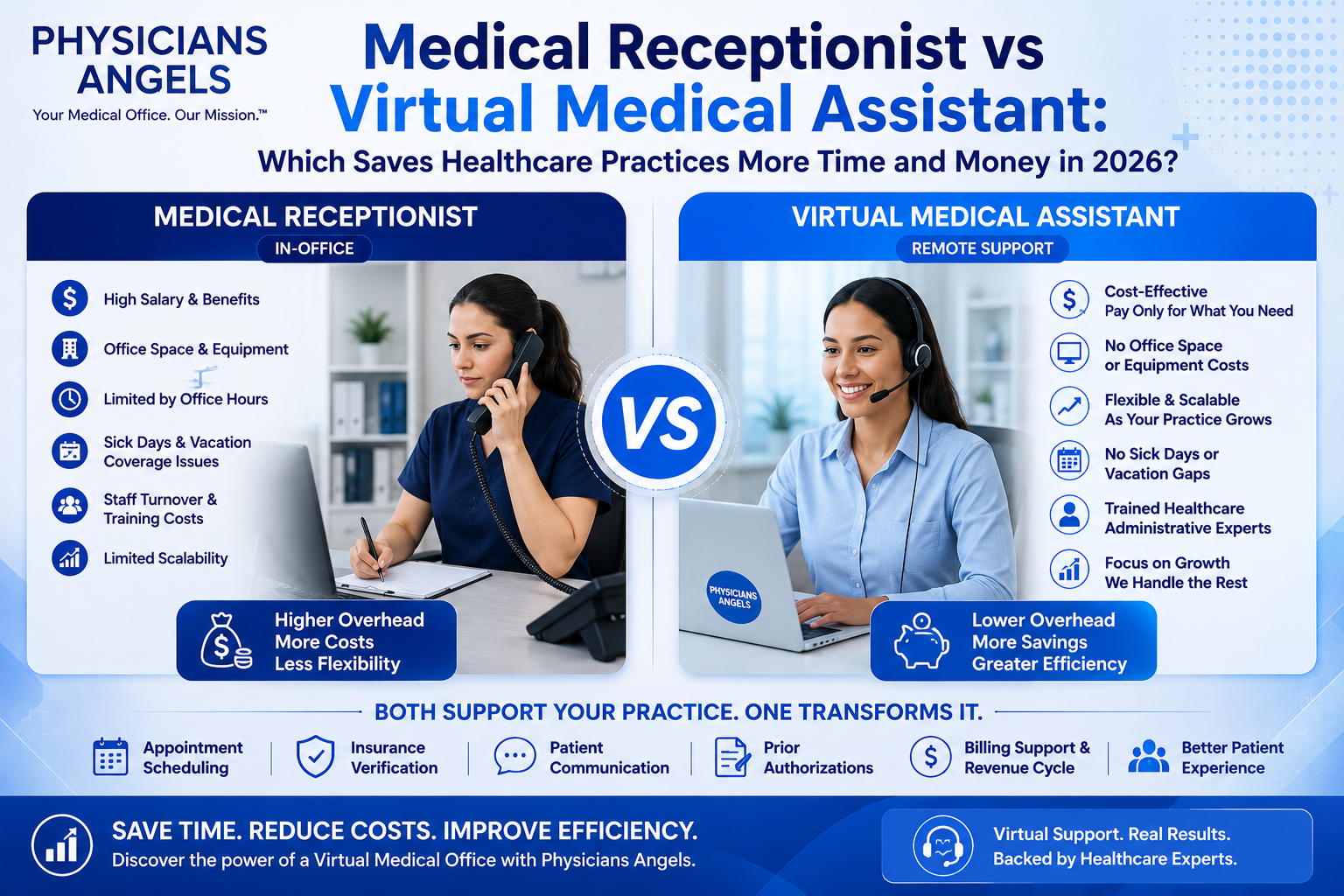
Medical Receptionist vs Virtual Medical Assistant: Which Saves Healthcare Practices More Time and Money in 2026?
Introduction
Healthcare practices across the United States are facing increasing pressure to do more with less. Rising labor costs, staffing shortages, increasing patient expectations, and growing administrative workloads have made it harder than ever to operate an efficient and profitable medical practice.
For years, hiring an in-house medical receptionist was the standard solution for managing front-desk operations. Today, however, many practices are exploring Virtual Medical Assistants (VMAs) as a more scalable and cost-effective alternative.
The question many healthcare providers are asking is:
Should you continue hiring traditional medical receptionists, or can a Virtual Medical Assistant provide better value for your practice?
In this guide, we'll compare both options and examine which solution saves healthcare organizations more time and money in 2026.
Understanding the Role of a Medical Receptionist
Medical receptionists are typically responsible for front-office operations and patient interactions.
Common responsibilities include:
-
Answering phone calls
-
Scheduling appointments
-
Patient registration
-
Insurance verification
-
Managing patient inquiries
-
Appointment reminders
-
Check-in and check-out support
-
Administrative coordination
While these tasks are essential, staffing challenges continue to impact many healthcare practices.
What Is a Virtual Medical Assistant?
A Virtual Medical Assistant (VMA) is a trained healthcare administrative professional who works remotely while supporting daily practice operations.
Unlike traditional receptionists, VMAs often provide broader support across multiple operational functions.
Services may include:
-
Appointment scheduling
-
Insurance verification
-
Prior authorizations
-
Patient communication
-
Medical billing support
-
Revenue cycle management assistance
-
Referral coordination
-
Patient follow-up calls
-
EHR data entry
-
Administrative workflow management
Virtual Medical Assistants effectively extend the capabilities of healthcare teams without increasing physical office staffing requirements.
Medical Receptionist vs Virtual Medical Assistant: Key Differences
1. Staffing Costs
Traditional Medical Receptionist
When hiring an in-house receptionist, practices typically pay for:
-
Salary or hourly wages
-
Payroll taxes
-
Employee benefits
-
Paid time off
-
Office space
-
Equipment
-
Training expenses
These costs continue regardless of patient volume.
Virtual Medical Assistant
With a VMA, practices can significantly reduce overhead because there are no costs associated with:
-
Office space
-
Workstations
-
Equipment purchases
-
Employee benefits
-
Recruitment expenses
Many healthcare organizations report substantial administrative savings after transitioning to virtual support models.
Winner: Virtual Medical Assistant
2. Availability and Coverage
Medical Receptionist
Traditional receptionists generally work fixed office hours.
Challenges include:
-
Vacation coverage
-
Sick leave
-
Staff turnover
-
Limited scheduling flexibility
Virtual Medical Assistant
Virtual teams often provide:
-
Extended coverage
-
Flexible scheduling
-
Backup staffing support
-
Scalable workloads
This allows practices to maintain continuity without staffing disruptions.
Winner: Virtual Medical Assistant
3. Administrative Capabilities
Medical Receptionist
Most receptionists focus primarily on front-desk functions.
Their role is often limited to:
-
Scheduling
-
Calls
-
Patient registration
Virtual Medical Assistant
Many VMAs provide support across multiple departments.
Examples include:
-
Insurance verification
-
Prior authorizations
-
Billing support
-
Referral processing
-
Patient outreach
-
Revenue cycle tasks
This broader skill set increases operational efficiency.
Winner: Virtual Medical Assistant
4. Practice Scalability
Growth often creates staffing challenges.
Medical Receptionist
As patient volume increases, practices frequently need to:
-
Hire additional staff
-
Expand office space
-
Increase payroll expenses
Virtual Medical Assistant
Virtual support can scale more easily.
Practices can increase administrative capacity without significantly increasing overhead costs.
Winner: Virtual Medical Assistant
5. Patient Experience
Patient satisfaction is heavily influenced by communication and responsiveness.
Common Front-Desk Challenges
Many practices struggle with:
-
Missed calls
-
Long hold times
-
Appointment delays
-
Scheduling bottlenecks
Virtual Medical Assistant Benefits
Virtual support teams can help:
-
Reduce missed calls
-
Improve appointment scheduling efficiency
-
Increase patient responsiveness
-
Enhance communication workflows
This often leads to better patient experiences and improved retention.
Winner: Virtual Medical Assistant
Cost Comparison: Medical Receptionist vs Virtual Medical Assistant
Healthcare practices often underestimate the true cost of in-house staffing.
A traditional receptionist may require:
-
Salary
-
Benefits
-
Payroll taxes
-
Training
-
Workspace expenses
-
Technology costs
Meanwhile, virtual staffing solutions allow practices to access trained healthcare professionals while avoiding many of these overhead expenses.
For growing practices, the difference can represent thousands of dollars in annual savings.
When a Medical Receptionist Still Makes Sense
Despite the advantages of virtual staffing, some practices may still benefit from an in-office receptionist.
Examples include:
-
High-volume walk-in clinics
-
Practices requiring constant physical front-desk presence
-
Facilities with complex on-site administrative workflows
However, even these practices often supplement their teams with virtual support.
Why More Healthcare Practices Are Choosing Virtual Medical Assistants in 2026
Several industry trends are driving adoption:
Rising Labor Costs
Healthcare staffing expenses continue to increase.
Staffing Shortages
Recruiting and retaining qualified administrative staff remains difficult.
Growth Demands
Practices need scalable solutions that support expansion.
Revenue Pressures
Organizations seek ways to improve profitability without sacrificing patient care.
Virtual Medical Assistants help address all four challenges simultaneously.
How Physicians Angels Helps Healthcare Practices Save Time and Money
Physicians Angels provides Virtual Medical Office solutions designed specifically for healthcare organizations.
Our virtual healthcare professionals support:
Front Desk Operations
-
Appointment scheduling
-
Patient communication
-
Call handling
Insurance Verification
-
Eligibility checks
-
Benefits verification
-
Coverage validation
Prior Authorizations
-
Submission management
-
Follow-up coordination
-
Approval tracking
Revenue Cycle Support
-
Billing assistance
-
Payment posting
-
Collections support
Administrative Workflow Optimization
-
Referral coordination
-
Documentation support
-
Operational efficiency improvements
By combining multiple services under one solution, Physicians Angels helps practices streamline operations while reducing administrative costs.
Signs Your Practice Is Ready for a Virtual Medical Assistant
Your practice may benefit from virtual support if you experience:
-
Frequent missed calls
-
Staffing shortages
-
Rising payroll costs
-
Scheduling backlogs
-
Insurance verification delays
-
Prior authorization bottlenecks
-
Revenue cycle inefficiencies
-
Administrative burnout
These challenges often indicate opportunities for operational improvement.
The Future of Medical Practice Administration
Healthcare operations are becoming increasingly digital and distributed.
In 2026, successful practices are focusing on:
-
Operational efficiency
-
Scalability
-
Cost control
-
Patient satisfaction
-
Revenue optimization
Virtual Medical Assistants have become a key component of this transformation.
Rather than replacing healthcare teams, they enhance practice capabilities while reducing administrative burden.
Final Thoughts
While traditional medical receptionists remain valuable in certain environments, Virtual Medical Assistants offer significant advantages for many healthcare practices.
From lower overhead costs and broader administrative capabilities to improved scalability and patient communication, virtual support models are helping healthcare organizations operate more efficiently in an increasingly competitive environment.
For practices seeking to reduce costs, improve workflows, and support growth without increasing payroll, Virtual Medical Assistants are often the smarter investment.
Physicians Angels helps healthcare providers streamline front-office operations, strengthen revenue cycle performance, and deliver exceptional patient experiences through comprehensive Virtual Medical Office solutions.
Ready to Save Time and Reduce Administrative Costs?
Discover how Physicians Angels can help your practice improve efficiency, reduce overhead, and scale operations without hiring additional in-house staff.
📧 Email: contact@physiciansangels.com
📞 Call: (419)-318-4471
🌐 Visit: www.physiciansangels.com