
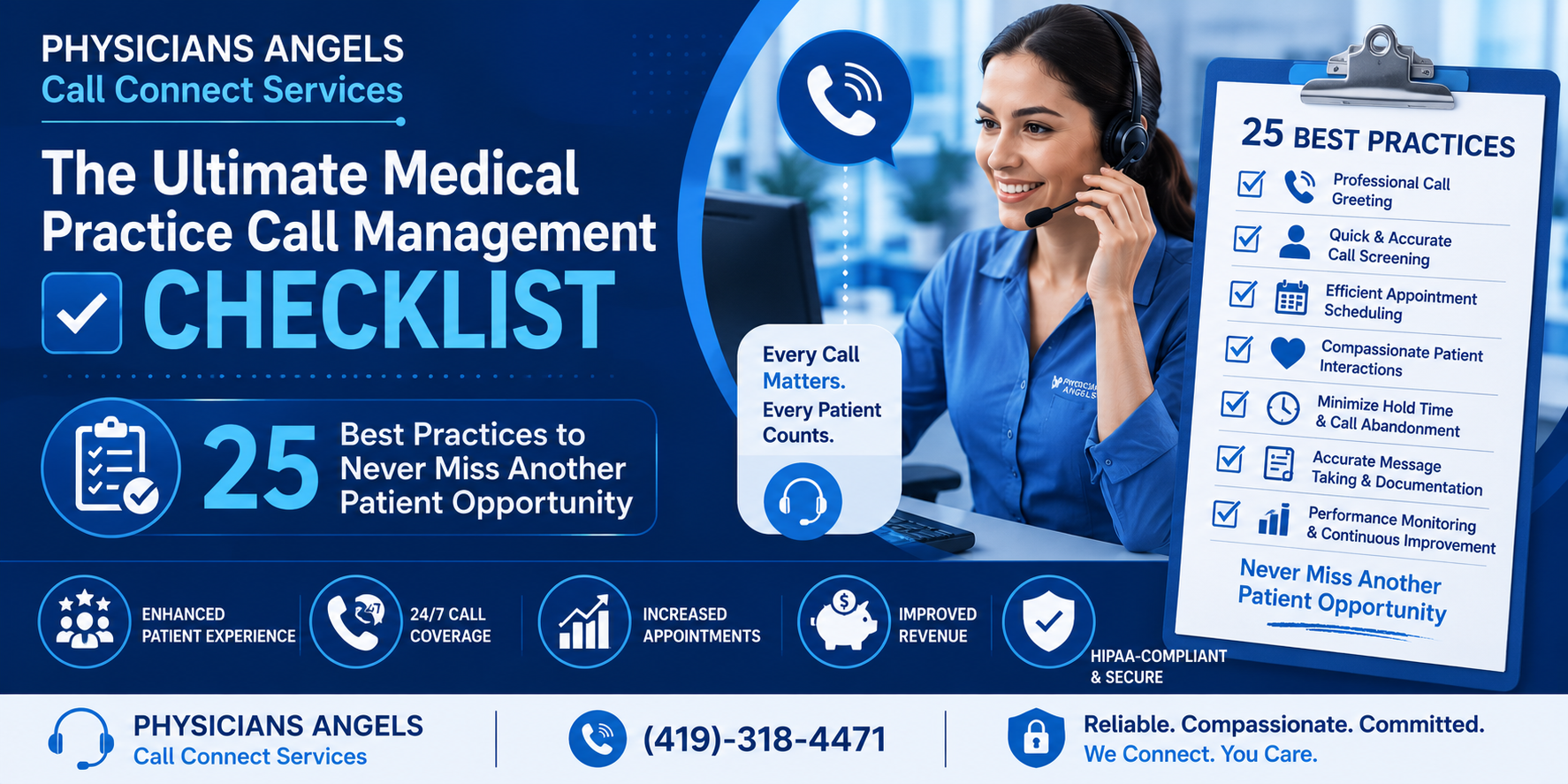
The Ultimate Medical Practice Call Management Checklist: 25 Best Practices to Never Miss Another Patient Opportunity
Introduction
Every patient call is more than just a conversation, it's an opportunity to schedule an appointment, answer an important healthcare question, strengthen patient trust, and support the financial health of your practice.
Unfortunately, many healthcare organizations struggle to manage growing call volumes. Busy front desks, staffing shortages, long hold times, and inconsistent call handling can lead to missed appointments, frustrated patients, and lost revenue.
In today's healthcare environment, patients expect prompt, professional, and compassionate communication. A delayed response or missed call may encourage them to seek care elsewhere.
The good news is that these challenges can often be addressed through consistent call management processes and the right support systems.
This comprehensive checklist outlines 25 best practices that can help healthcare practices improve patient communication, streamline workflows, and capture every patient opportunity.
Why Call Management Matters More Than Ever
Patient communication influences nearly every aspect of a healthcare practice.
Effective call management can help improve:
-
Patient access
-
Appointment scheduling
-
Provider utilization
-
Front-desk efficiency
-
Patient satisfaction
-
Revenue cycle performance
-
Practice reputation
-
Staff productivity
A structured approach helps ensure every caller receives a consistent and professional experience.
The Ultimate Call Management Checklist
1. Answer Calls Promptly
Long wait times create frustration.
Aim to answer incoming calls as quickly as possible during business hours.
2. Use a Consistent Greeting
Patients should immediately know they've reached the correct practice.
A professional greeting sets the tone for the conversation.
3. Verify Patient Identity
Before discussing appointments or protected health information, confirm the caller's identity using your established verification process.
4. Keep Hold Times to a Minimum
If placing a caller on hold is necessary, communicate clearly and return promptly.
5. Offer Appointment Scheduling During the First Call
Whenever appropriate, help patients schedule appointments before ending the conversation.
Reducing extra call-backs improves convenience and efficiency.
6. Confirm Appointment Details
Verify:
-
Provider
-
Date
-
Time
-
Location
-
Visit type
This helps reduce scheduling errors.
7. Document Every Call
Maintain accurate documentation for:
-
Patient requests
-
Appointment changes
-
Messages
-
Follow-up needs
-
Escalations
Complete documentation supports continuity of care.
8. Route Calls Correctly
Develop clear workflows for routing calls related to:
-
Clinical questions
-
Billing
-
Scheduling
-
Prescription refills
-
Referrals
-
Urgent concerns
9. Create Escalation Procedures
Define how urgent or time-sensitive calls are handled.
Every staff member should understand escalation protocols.
10. Support After-Hours Calls
Patients often need assistance outside regular office hours.
Reliable after-hours call coverage helps maintain accessibility.
11. Manage Overflow Calls
Peak periods shouldn't result in unanswered calls.
Overflow support helps maintain consistent service during busy times.
12. Use Standard Call Scripts
Scripts improve consistency while allowing flexibility for natural conversations.
13. Provide Compassionate Communication
Patients may be anxious, frustrated, or experiencing medical concerns.
Empathy should be part of every interaction.
14. Verify Insurance Questions Efficiently
Patients frequently call about coverage, referrals, and authorizations.
Clear workflows help reduce confusion and unnecessary follow-up.
15. Handle Prescription Requests Consistently
Establish standardized procedures for documenting and forwarding refill requests.
16. Confirm Follow-Up Actions
Before ending every conversation, summarize the next steps so patients know what to expect.
17. Monitor Call Quality
Regularly review:
-
Greeting quality
-
Professionalism
-
Accuracy
-
Documentation
-
Resolution
Continuous monitoring helps maintain high standards.
18. Track Key Call Metrics
Monitor important performance indicators such as:
-
Call answer rate
-
Hold time
-
Abandonment rate
-
Average handling time
-
First-call resolution
-
Appointment conversion rate
Data supports informed operational decisions.
19. Reduce Front-Desk Interruptions
Allow in-office staff to focus on patients while trained call agents manage incoming calls efficiently.
20. Prepare for High-Volume Periods
Seasonal demand, provider vacations, and flu season often increase call volume.
Plan ahead to maintain service quality.
21. Train Staff Regularly
Provide ongoing education covering:
-
Communication skills
-
Scheduling procedures
-
Practice updates
-
Workflow changes
-
Patient service expectations
22. Gather Patient Feedback
Patient surveys provide valuable insight into communication quality and areas for improvement.
23. Review Call Workflows Frequently
Healthcare operations evolve over time.
Regular workflow reviews help maintain efficiency and adapt to changing patient needs.
24. Integrate Call Management With Practice Operations
Effective communication works best when aligned with appointment scheduling, patient messaging, insurance verification, and other administrative workflows.
Integrated processes help improve operational consistency.
25. Partner With a Professional Medical Call Management Team
As practices grow, maintaining consistent call coverage becomes more challenging.
Professional medical call management services can extend your administrative capacity while supporting patient access and practice efficiency.
Common Warning Signs That Your Practice Needs Better Call Management
You may benefit from improving your call management strategy if your practice experiences:
-
Missed calls
-
Long hold times
-
Frequent voicemails
-
Appointment scheduling delays
-
Patient complaints
-
Front-desk burnout
-
High call abandonment
-
Poor documentation
-
Missed follow-ups
-
Decreased new patient conversions
Recognizing these signs early can help prevent lost opportunities.
How Physicians Angels Call Connect Supports Every Best Practice
Physicians Angels Call Connect is designed to help healthcare organizations strengthen patient communication through professional medical call management services.
Our solutions include:
-
Live call answering
-
Appointment scheduling
-
Appointment confirmations
-
After-hours call support
-
Overflow call management
-
Message documentation
-
Call routing
-
Patient communication
-
Customized call scripts
-
Escalation support
-
Performance reporting
Our experienced virtual call agents work as an extension of your practice, helping ensure every patient interaction is handled professionally and consistently.
Benefits of Following This Checklist
Implementing these best practices can help your practice:
-
Improve patient access
-
Reduce missed calls
-
Increase appointment bookings
-
Enhance patient satisfaction
-
Improve front-desk efficiency
-
Support providers
-
Strengthen operational consistency
-
Improve practice reputation
-
Increase administrative productivity
-
Create a more reliable patient communication experience
Results vary depending on staffing, workflows, patient volume, and operational processes.
Frequently Asked Questions
Why is call management important for healthcare practices?
Call management helps ensure patients can schedule appointments, receive timely information, and communicate effectively with their healthcare providers. Consistent processes also support operational efficiency and patient satisfaction.
What metrics should healthcare practices monitor?
Important metrics include call answer rate, average speed to answer, hold time, abandonment rate, first-call resolution, appointment conversion rate, and patient satisfaction.
Can outsourced call management support specialty practices?
Yes. Specialty clinics can customize workflows to address their unique scheduling, communication, and patient service requirements.
How often should call management workflows be reviewed?
Practices should periodically review workflows and performance data to identify opportunities for improvement and ensure processes remain aligned with operational goals.
How can Physicians Angels Call Connect help?
Physicians Angels Call Connect provides professional medical call management services, including live answering, appointment scheduling, after-hours coverage, overflow support, message documentation, and customized workflows to help practices improve patient communication and operational efficiency.
Ready to Strengthen Your Practice's Patient Communication?
Outstanding patient communication begins with consistent call management. By implementing these 25 best practices, your healthcare organization can improve patient access, reduce missed opportunities, support your front-desk team, and create a more efficient administrative operation.
If you're looking to enhance your call handling capabilities without increasing the burden on your staff, Physicians Angels Call Connect is here to help.
Schedule a Free Consultation
Discover how Physicians Angels Call Connect can help your practice implement proven call management strategies, improve patient responsiveness, and ensure every patient interaction is handled with professionalism and care.
Contact us today to learn how our customized medical call management solutions can help your practice capture every patient opportunity while delivering an exceptional patient experience.
📧 Email: contact@physiciansangels.com
📞 Call: (419)-318-4471
🌐 Visit: www.physiciansangels.com